
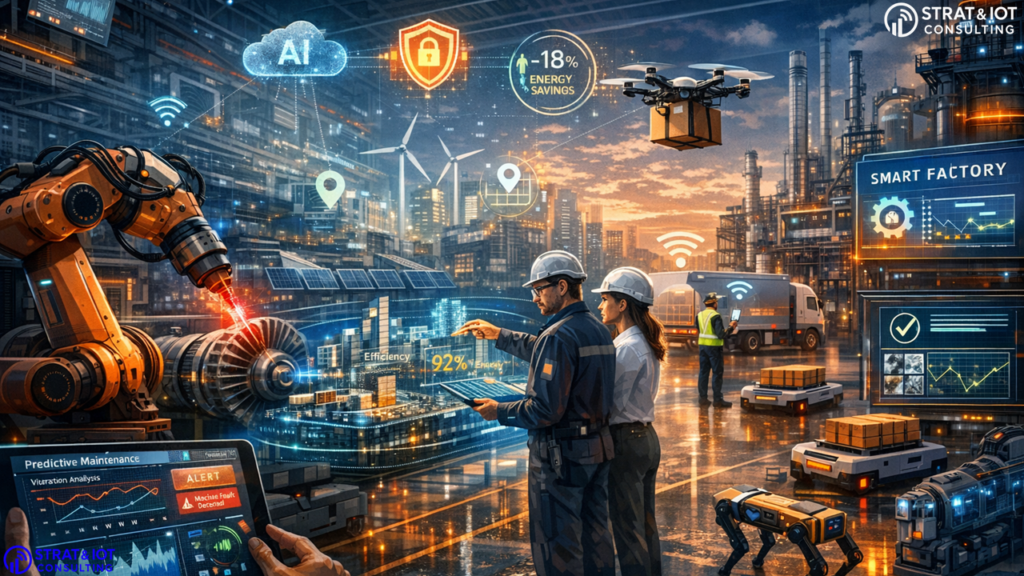
From the first machine-to-machine (M2M) connections in the early 2000s to today’s connected infrastructures, the Internet of Things (IoT) has profoundly transformed the mobility, transportation, energy sectors, and more broadly, industry as a whole.
This transformation (four major phases over 25 years) has also led to simpler everyday experiences in our personal lives.
📍 2000s: the emergence of sensors and M2M
➡️ First telematics systems deployed in vehicle fleets.
➡️ Industrial sensors connected to mobile networks for basic monitoring.
📍 2010s: the rise of connectivity and platforms
➡️ Expansion of 3G/4G networks and the emergence of NB-IoT / LTE-M.
➡️ Deployment of millions of smart meters in the energy sector.
➡️ Real-time fleet management systems, route optimization, and asset tracking.
📍 Late 2010s – early 2020s: distributed intelligence
➡️ Edge computing and embedded AI enabling real-time analytics.
➡️ Connected vehicles and predictive maintenance for trains, buses, and aircraft.
➡️ Integration of IoT with cloud platforms for visualization and automation.
📍 Today: toward a mature and integrated IoT ecosystem
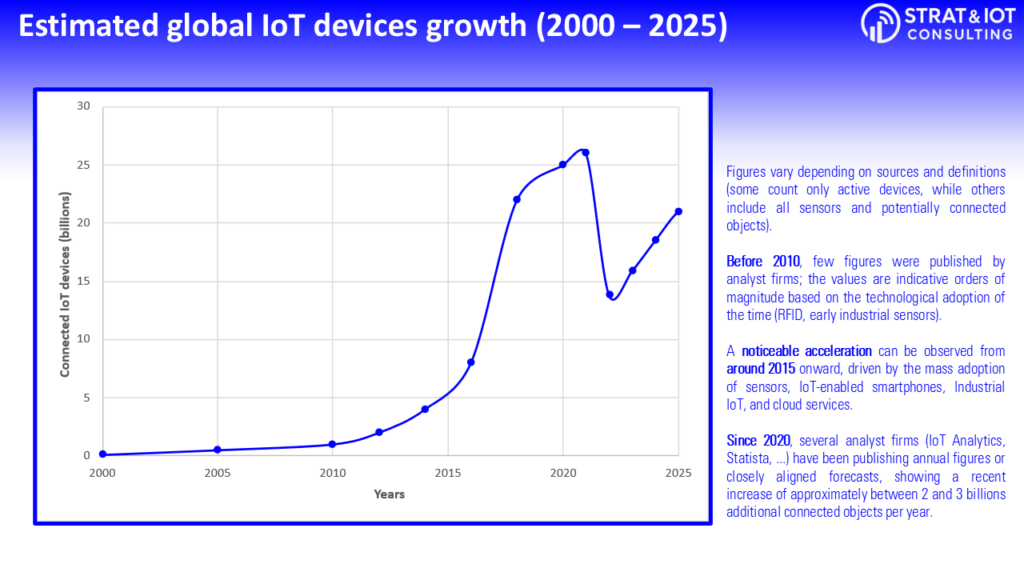
➡️ Billions of connected devices worldwide, with double-digit annual growth.
➡️ IoT as the backbone of smart cities, sustainable mobility, and the energy transition.
➡️ Combined with data, AI, and digital twins to optimize efficiency, safety, and sustainability.
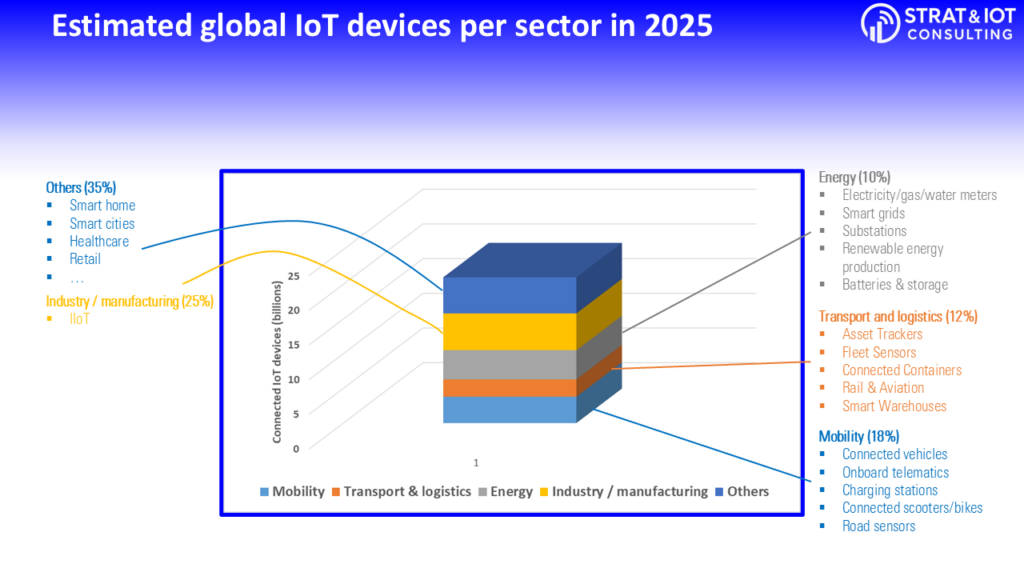
By 2025, nearly 40% of global IoT devices are concentrated in mobility, transportation, and energy, clear evidence that IoT has become the invisible infrasctruture of our physical systems.
Key benefits of IoT in the industrial world, whatever the sector is, are:
✅ Predictive maintenance : less downtime, lower costs
✅ Improved operational performance (OEE)
✅ Enhanced product quality
✅ Reduced energy consumption
✅ End-to-end traceability & connected supply chains
✅ Improved people and site safety
✅ New business models
✅ Foundation for Industry 4.0