
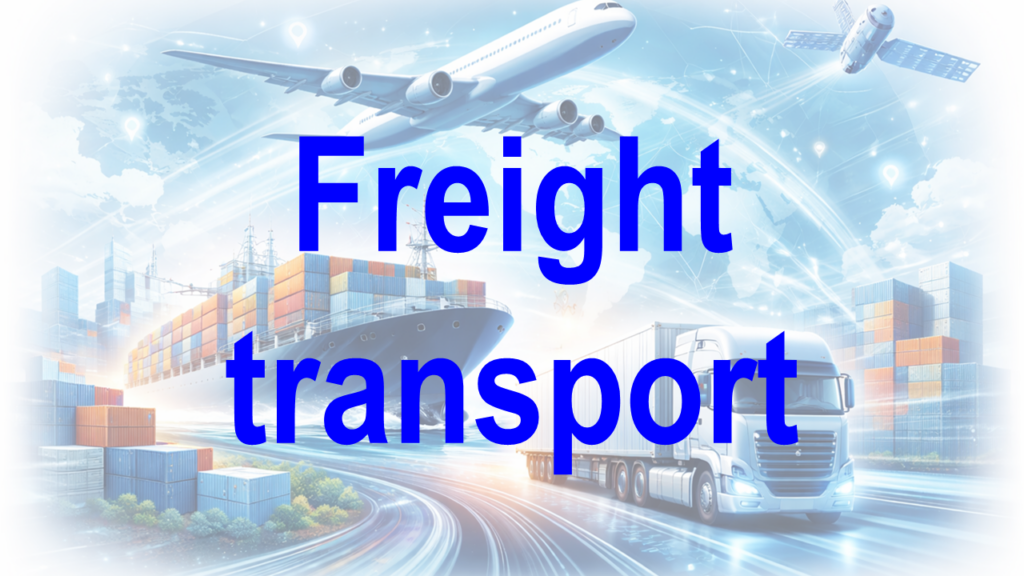
Intelligent freight transport is reshaping supply chains into connected, intermodal, and decarbonized ecosystems, powered by data and digital technologies. It shifts the focus from infrastructure to system-wide performance, service continuity, and environmental impact, enabling more agile, resilient, and sustainable logistics aligned with climate goals.
Key challenges remain around interoperability, data governance, cybersecurity, and stakeholder coordination.
Foundations of Intelligent Freight Transport
- Integrated Multimodality
Smart freight transport relies on the seamless integration of transport modes (road, rail, inland waterways, maritime, air). The goal is to build continuous logistics chains, optimized according to distances, volumes, and environmental constraints. Planning is carried out at the scale of the end-to-end journey, from origin to last mile, enabled by multimodal platforms and shared information systems.
- Data-Driven Control
Smart logistics is based on the use of data (vehicles, warehouses, sensors, geolocation). It enables real-time tracking, route optimization, and risk anticipation. Through artificial intelligence, supply chains become dynamic and predictive.
Key Infrastructures and Technologies
- Intelligent transport and logistics systems
Intelligent systems (TMS, WMS, fleet management, traceability, freight regulation) form the technological backbone of modern transport. They improve on-time performance, reduce empty miles, optimize load factors, and enhance delivery reliability, while controlling operating costs.
- Connected and electrified vehicles
Fleets are evolving toward connected, automated, and electrified vehicles, particularly in urban logistics. This transition supports eco-driving, predictive maintenance, and energy optimization. In cities, electric and low-carbon solutions reduce emissions and noise pollution, in line with low-emission zones.
- Shared Logistics and Resource Pooling
Resource pooling (warehouses, vehicles, delivery capacity) improves resource utilization, reduces delivery rounds, and limits urban congestion. It relies on local hubs, urban consolidation centers, and shared last-mile solutions.
New Service Models
Smart logistics is transforming the sector toward digital platforms, integrated services, and “logistics as a service” offerings. Clients are now seeking overall performance (lead times, reliability, carbon footprint) rather than simple transportation. Local authorities are strengthening their role as organizers and regulators, particularly in urban logistics, while private players are developing innovative data- and automation-driven services.
Decarbonization and Environmental Performance
Smart freight transport is a key lever for reducing the environmental footprint. It promotes modal shift (rail, inland waterways), fleet electrification, route optimization, and the reduction of unnecessary trips. The results include lower greenhouse gas emissions, improved air quality, and reduced noise levels, particularly in urban areas. Performance is now assessed at the scale of the overall logistics system, integrating costs, service quality, and environmental impacts.