
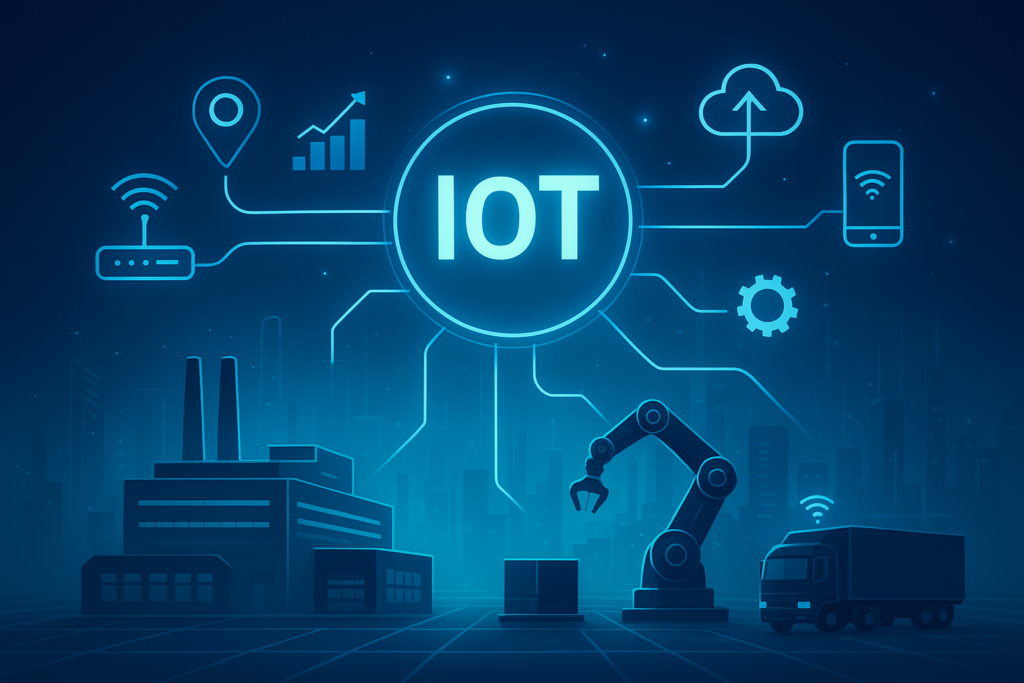
The Internet of Things (IoT) is no longer just a technological trend: it has now become a pillar of digital transformation for businesses and French industry.
IoT adoption is progressing rapidly, particularly in energy and mobility. To connect sensors and devices, companies rely on a mix of technologies, with the most widely deployed (or currently being deployed) in energy and mobility being the following:
➡️ Cellular IoT networks (NB-IoT & LTE-M) have very robust nationwide coverage in France. They are ideal for low-power devices and industrial deployments across large-scale environments.
➡️ The LoRaWAN communication protocol is widely used for private or semi-private short- and long-range networks. Large-scale LoRaWAN deployments in municipalities are slowing down for several reasons, such as the end of the “innovation showcase” effect, difficulty in demonstrating municipal ROI, and operational fragmentation and complexity. However, present in many smart city and utilities projects (water, energy), LoRaWAN remains highly relevant, although its positioning is evolving.
➡️ Satellite-based solutions: several players are developing constellations dedicated to satellite IoT, enabling connectivity in the most remote areas, where communication operator coverage is less developed, such as in certain regions of Africa.
Connectivity is no longer just a matter of network access. Challenges are expanding with multi-provider management and global roaming, which remain issues for 40% of IoT companies. The adoption of eSIM / multi-IMSI SIM is becoming a key criterion to optimize coverage and reduce costs.
Thanks to reliable connectivity, industrial players are leveraging high value-added use cases:
✅ Predictive maintenance
✅ Real-time asset tracking
✅ Energy optimization
✅ Automation of transport and distribution networks (energy, mobility) and manufacturing production lines
These use cases help improve operational performance while reducing costs. Connectivity lies at the heart of this transformation, which is already well established in energy networks (mass-market or business metering, MV/LV substations, injection points, etc.) across Europe. Those who succeed in optimizing it will create sustainable value.
However, IoT connectivity is becoming a strategic component for entering the era of Industry 4.0, and French industries are lagging behind. Companies are making progress and industrializing their IoT use cases, but in a way that remains far too fragmented.