
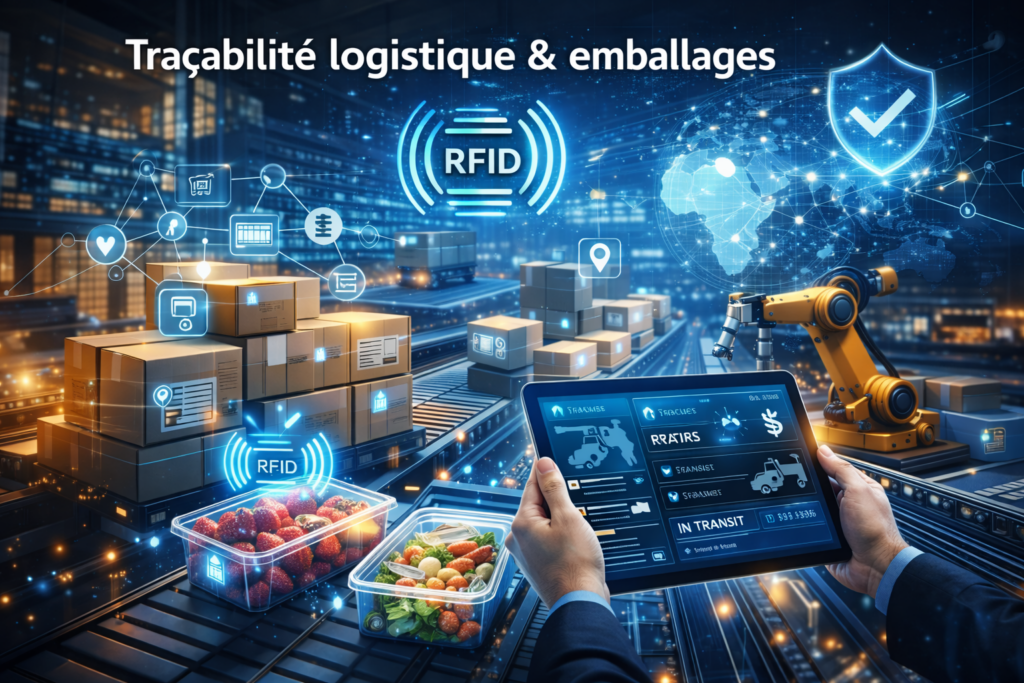
Logistics and packaging, in terms of traceability, are a source of industrial value creation. This traceability acts as a cross-functional lever, delivering:
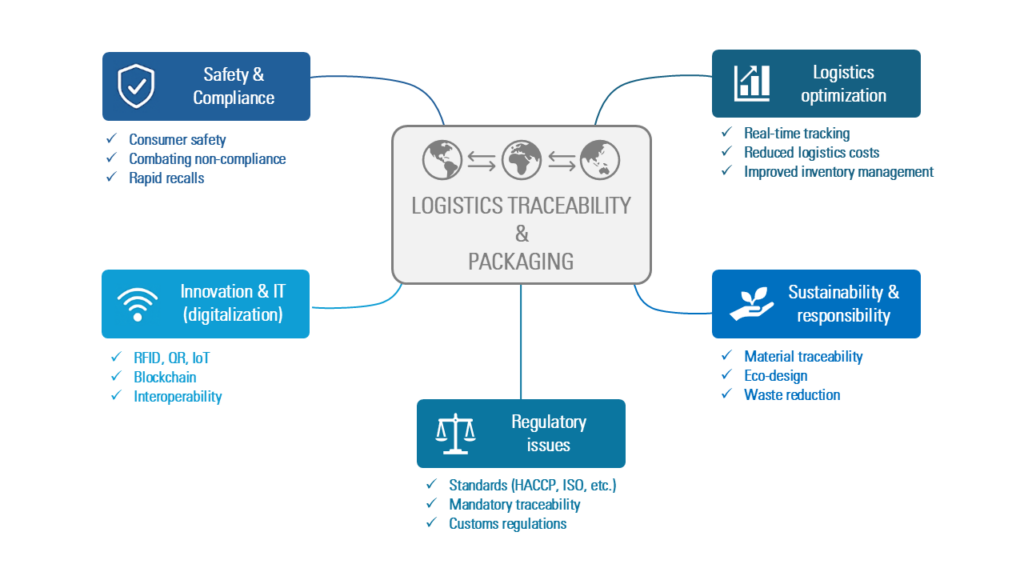
➡️ Improved industrial performance, with increased productivity, better overall equipment effectiveness (OEE), and measurable operational gains.
➡️ Enhanced quality assurance and compliance, with fewer non-conformities, reduced customer returns, and improved satisfaction and industrial reputation.
➡️ Cost reduction and risk control, through lower material losses and unnecessary packaging, fewer picking and shipping errors, and reduced safety stocks—thereby minimizing litigation, insurance, and recall costs.
➡️ Technological innovation and automation, generating additional value such as industrial upscaling (connected packaging), automation (RFID, NFC, dynamic QR codes, smart IoT sensors), digital transformation of the production model (MES, ERP, WMS, APS integration), and blockchain securing the information chain.
➡️ Commercial differentiation and customer transparency, with proof of origin and visibility into the product’s environmental footprint.
➡️ Support for eco-design and the circular economy, through material optimization, reduced carbon footprint, compliance with Extended Producer Responsibility (EPR) regulations, and alignment with sustainable markets.
➡️ Strengthened industrial resilience, ensuring production continuity, reduced risks, and greater robustness in times of crisis.