
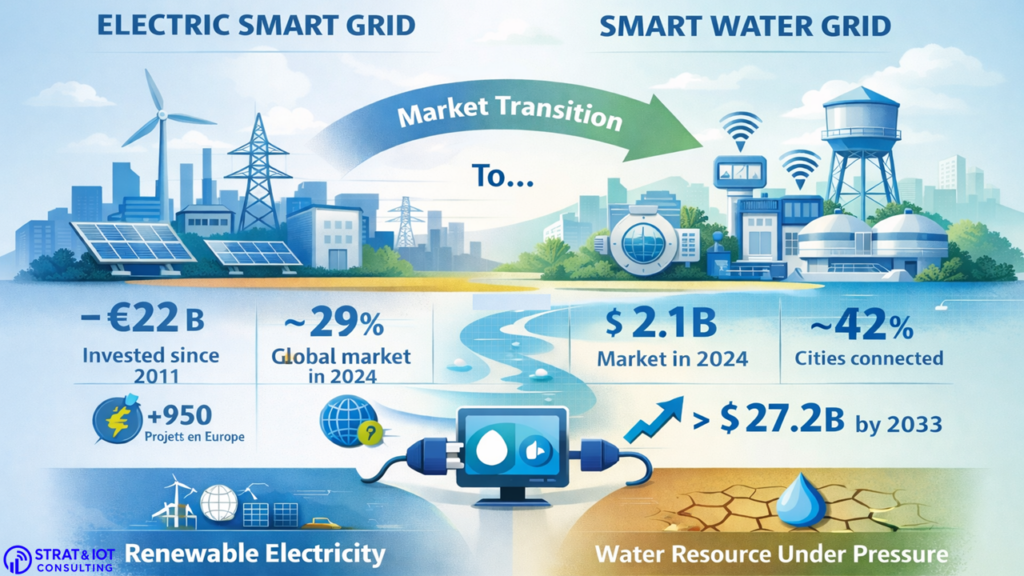
The concept of smart grids in Europe initially focused on intelligent electricity networks:
➡️ Europe accounts for approximately 29% of the global smart grid technology market in 2024, confirming its strategic role in intelligent electrical infrastructure
➡️ Since 2011, the EU has invested more than €22 billion in over 950 smart grid projects across the 27 Member States, integrating smart meters, real-time management, renewable energy integration, and more
➡️ These systems aim to improve grid flexibility and enable greater integration of renewable energy sources into the European energy mix
After decades of investment in electricity, traditional smart grid and smart metering players are now exploring new markets where network intelligence can also create value. Water is becoming a scarce resource, with significant environmental and social impacts:
➡️ Approximately 20% of European territory and 30% of the population experience water stress every year
➡️ In southern Europe, up to 70% of the population faces seasonal water shortages during summer
Without improved water management, water- and energy-related costs could place a heavy burden on the European economy, with a potential GDP decline of up to 8% in high-income countries by 2050 if losses and inefficiencies are not addressed.
I recommend reading the book Emergency Preparedness by Paul RÜBIG EU, which provides a comprehensive argumentation on this topic.
In this context, the business development for intelligent water networks is substantial:
🎯 In 2024, Europe represented a market of approximately USD 2.1 billion for smart water grid solutions
🎯 The European market for digital water solutions (beyond network technologies alone) is expected to more than double, growing from USD 13.7 billion in 2024 to USD 27.2 billion by 2033
🎯 This growth (with approximately 8% compound annual growth rate) will generate nearly USD 196 billion in cumulative spending in Europe between 2024 and 2033
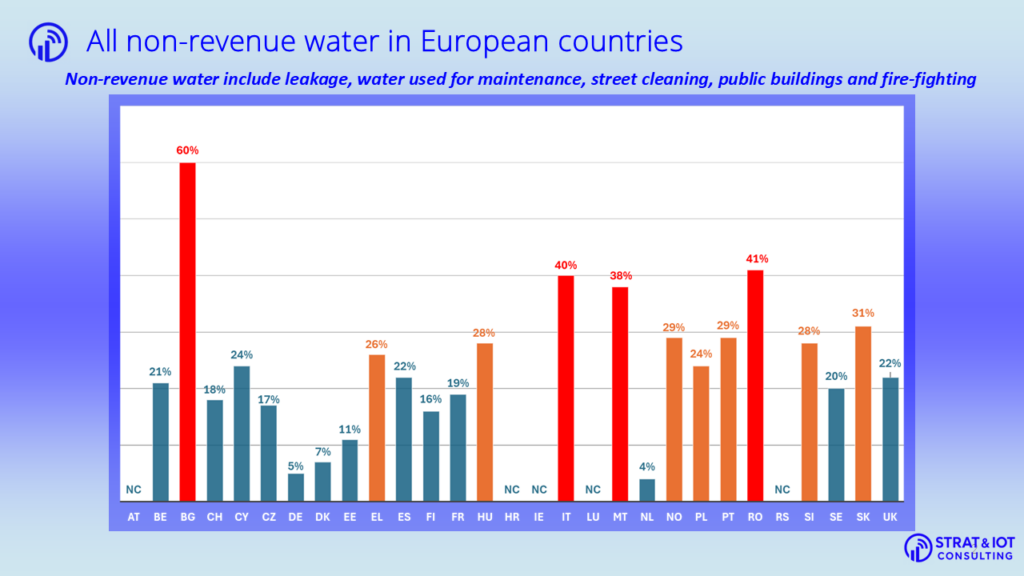
In terms of deployment:
✅ Nearly 42% of European municipalities had already deployed connected (IoT-enabled) water networks by the end of 2024
✅ Around 28% of contracts in this market included advanced analytics or SaaS components, demonstrating a shift toward high value-added systems
These data highlight a significant economic shift from electric smart grids to smart water grids, as intelligent solutions address very tangible challenges (leakage, treatment, consumption, energy optimization) in a sector long considered slower to digitalize.
This transition illustrates a new economic dynamic for intelligent technology providers: moving from energy management toward a broader “water–energy–digital nexus”, driven by the need for efficiency, resilience, and resource savings.