
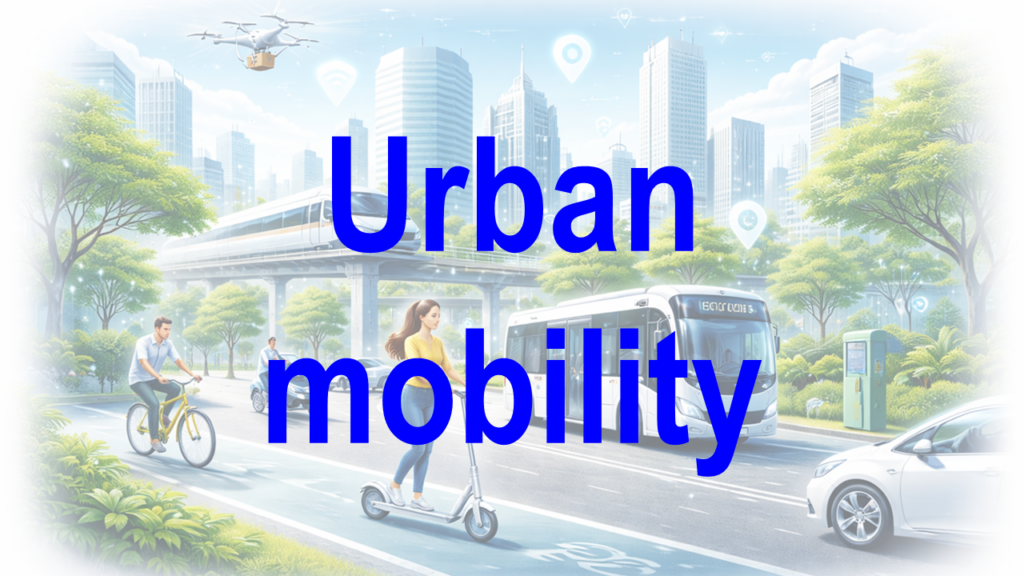
Smart urban mobility transforms transport systems into connected, multimodal, low-carbon ecosystems, driven by data and centered on the user. It shifts from an infrastructure-focused logic to a service-oriented, system-performance approach, aligned with climate objectives. Cities are evolving toward integrated and adaptive mobility systems, offering gains in efficiency and sustainability, while also raising significant technical and organizational challenges.
Foundations of Smart Mobility
- Integrated Multimodality
Smart mobility relies on the seamless integration of transport modes (walking, cycling, public transport, shared mobility, on-demand services). It aims to provide continuous door-to-door journeys, enabled by unified ticketing, MaaS platforms, and integrated pricing. Users therefore access a comprehensive mobility service rather than a simple transport ticket.
- Data-Driven Management
Smart mobility is based on the use of data (traffic, GPS, smartphones, parking, weather). It enables dynamic regulation, real-time information, and service optimization.
With artificial intelligence, the system shifts from static management to real-time, predictive control.
Key Infrastructure and Technologies
- Intelligent Transport Systems (ITS)
ITS (adaptive traffic lights, bus priority, centralized traffic management, incident detection) optimize traffic management. They reduce travel times, limit congestion, and improve safety, while maximizing the use of existing infrastructure.
- Connected and Electrified Vehicles
Vehicles are becoming connected, automated, and electrified. They support eco-driving, V2X coordination, and energy optimization, with priority deployment in public fleets.
- Shared Mobility
Shared mobility services (bikes, scooters, car-sharing, ride-sharing) reduce private car use and complement mass transit systems. Their integration into MaaS platforms is key to delivering a seamless user experience.
New Service Models
Smart mobility is reshaping economic models, shifting from ownership to usage, with the growth of integrated mobility services, MaaS operators, and open transport data. Public authorities are becoming regulators and integrators, safeguarding the public interest, while private players deliver digital platforms and technological innovation.
Decarbonization and Environmental Performance
Smart mobility is a key driver of the urban ecological transition. It promotes modal shift, fleet electrification, and travel optimization, reducing CO₂ emissions, air pollution, noise, and energy consumption. Performance is now assessed at the scale of the overall mobility system, rather than mode by mode.