
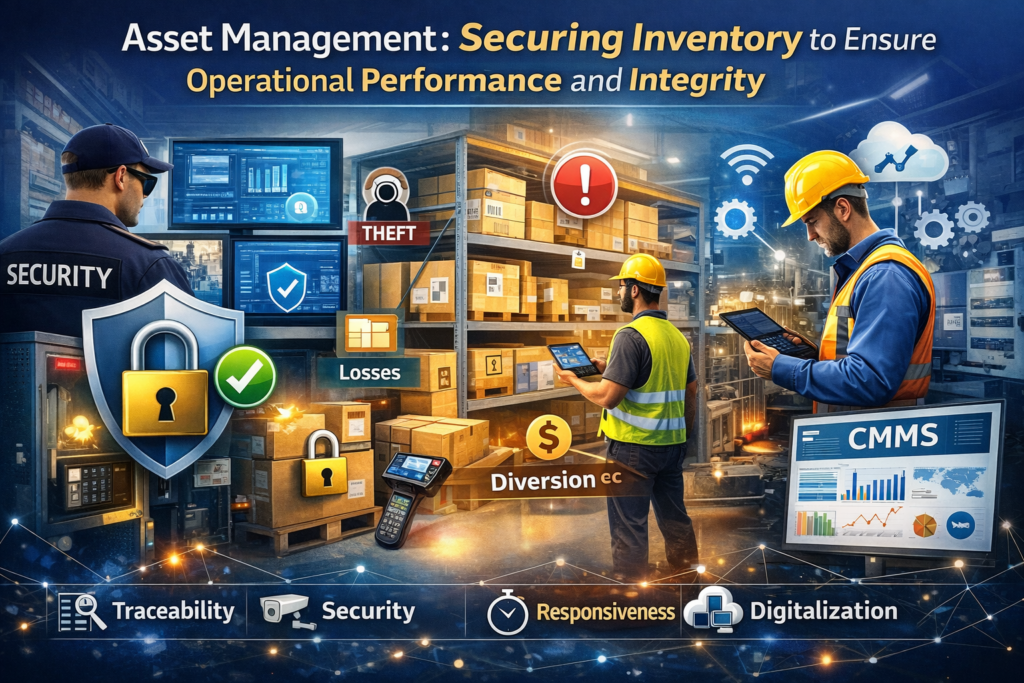
In a highly constrained industrial environment, asset management is no longer limited to equipment availability. It must now address a often underestimated but critical challenge: the physical and informational security of inventory against risks of theft, losses, and misappropriation.
Combined with traceability and maintenance responsiveness, this security becomes a major lever for performance and cost control.
1. Inventory security: balancing availability and asset protection
Maintenance inventory represents significant value. In some industrial sectors, it can reach 5 to 10% of total asset value.
Beyond tied-up capital, these inventories are exposed to real risks such as internal and external theft, logistical losses (errors, omissions, poor management) or diversion of parts (personal use or resale)
According to several international logistics studies, inventory-related losses (including theft and errors) can account for up to 1 to 3% of annual revenue in some industrial companies.
These risks are amplified when inventory is multiplied and decentralized, traceability is insufficient and access controls are weak.
Inventory security therefore relies on regular and automated inventory checks, physical access controls (badges, secured areas) and digital tracking systems for stock movements.
2. Traceability: a safeguard against deviations and losses
Traceability is not only about optimizing maintenance; it is also a key tool to combat anomalies and fraud. CMMS (Computerized Maintenance Management Systems) enable tracking of:
- WHO took a part
- WHEN it was used
- WHICH asset was involved
More than geography, the determining factors are company size, level of industrialization, and regulatory pressure.
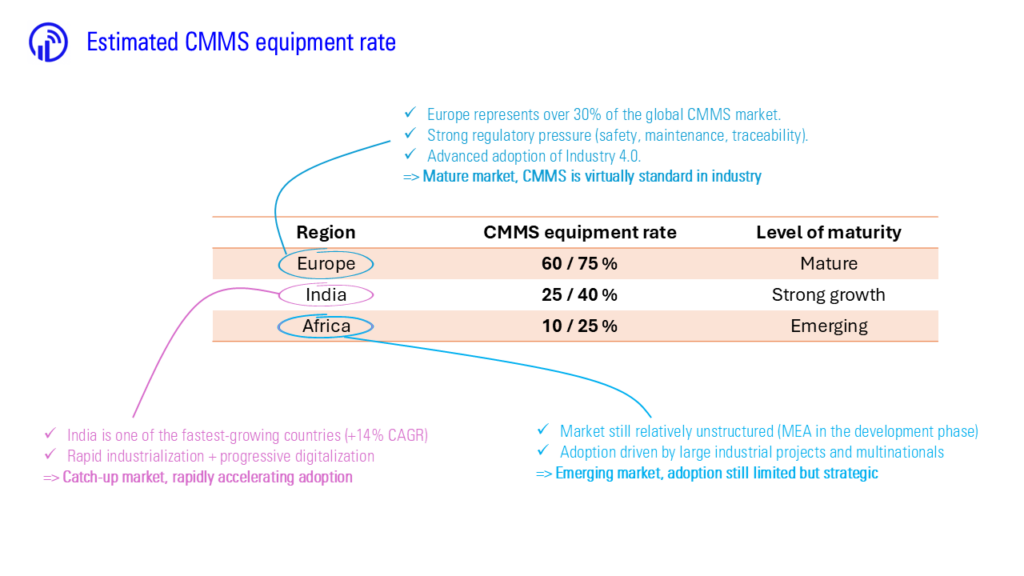
Effective traceability allows organizations to quickly identify stock discrepancies, detect abnormal behaviors and limit equipment misappropriation. Without traceability, losses can go unnoticed for months, generating significant hidden costs.
3. Maintenance responsiveness vs. flow control: finding the right balance
Operational pressure often leads companies to prioritize speed through:
- open access to parts
- unsecured inventory
- simplified procedures
However, this approach increases the risks of unreported losses, untracked withdrawals and/or opportunistic misuse. The challenge is therefore to balance operational responsiveness with inventory security.
Leading organizations implement:
- Smart inventory systems (automated dispensers, connected cabinets)
- Controlled but fast access
- Simplified yet fully traceable processes
The result is a simultaneous reduction in both intervention time and losses.
4. Inventory decentralization: A controlled risk factor
Decentralization improves responsiveness but mechanically increases risks of multiplication of storage locations, loss of overall visibility and inconsistent practices.
Without proper tools, this can lead to:
- invisible overstocking
- inventory discrepancies
- increased theft or undetected losses
To secure a decentralized organization, it is essential to centralize information, even if physical stocks are distributed, standardize practices, automate data reporting.
5. Digitalization: a key lever for security and optimization
Digital transformation is reshaping asset management by integrating security at its core. Modern solutions enable:
- real-time tracking of parts (barcodes, RFID)
- automated alerts in case of anomalies
- analysis of suspicious consumption patterns
The CMMS market is rapidly growing, with projections between $3.8 and $5 billion by 2034, highlighting the strategic importance of these tools.
Benefits include reduced losses and theft, improved data reliability, cost optimization and enhanced asset governance.
Asset management can no longer be separated from inventory risk management. Theft, losses, and misappropriation represent significant hidden costs that are often underestimated. High-performing companies adopt a holistic approach combining physical inventory security, full traceability of flows, controlled responsiveness of interventions and process digitalization.
The objective is no longer just to have the right parts at the right time, but to ensure they are properly used, tracked, and protected.