
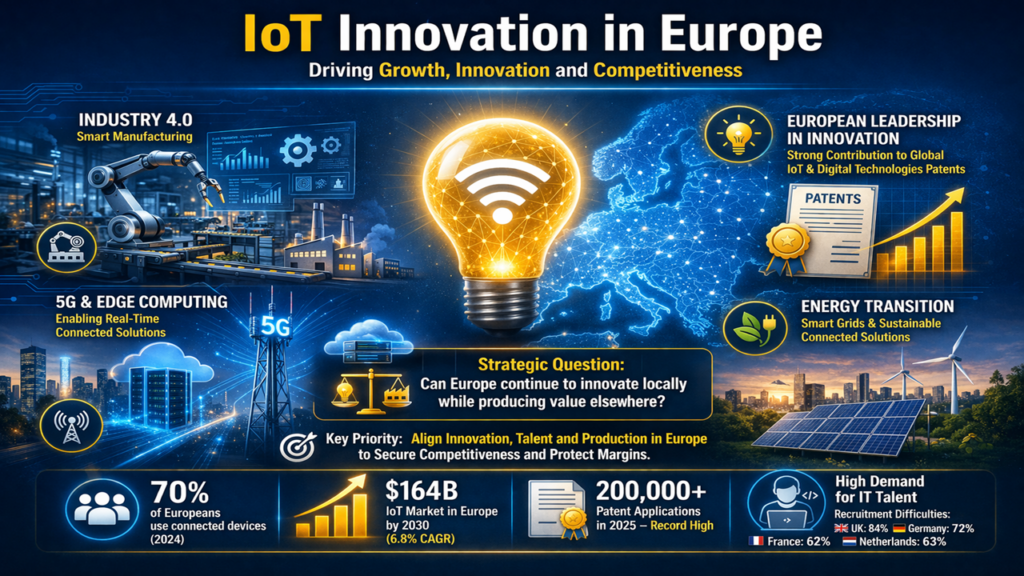
All sectors are now impacted by IoT. The often-mentioned decline of European industry contrasts with the rapid growth in the adoption of IoT technologies.
In 2024, 70% of Europeans were using connected devices (IoT). The European market is expected to reach $164 billion by 2030, with growth exceeding 6.8%. IoT is mainly driven by three key segments:
➡️ Industry 4.0 (smart manufacturing)
➡️ 5G and edge computing
➡️ Energy transition
Europe is above all a major player in innovation:
✅ With more than 200,000 patent applications in 2025 (a record)
✅ And a strong contribution from digital technologies (including IoT)
European countries are heavily investing in IoT markets and, as a result, are driving job creation through:
💰 Investments
🚀 IoT startups
🧑💻 Demand for IT talent (education and skills development)
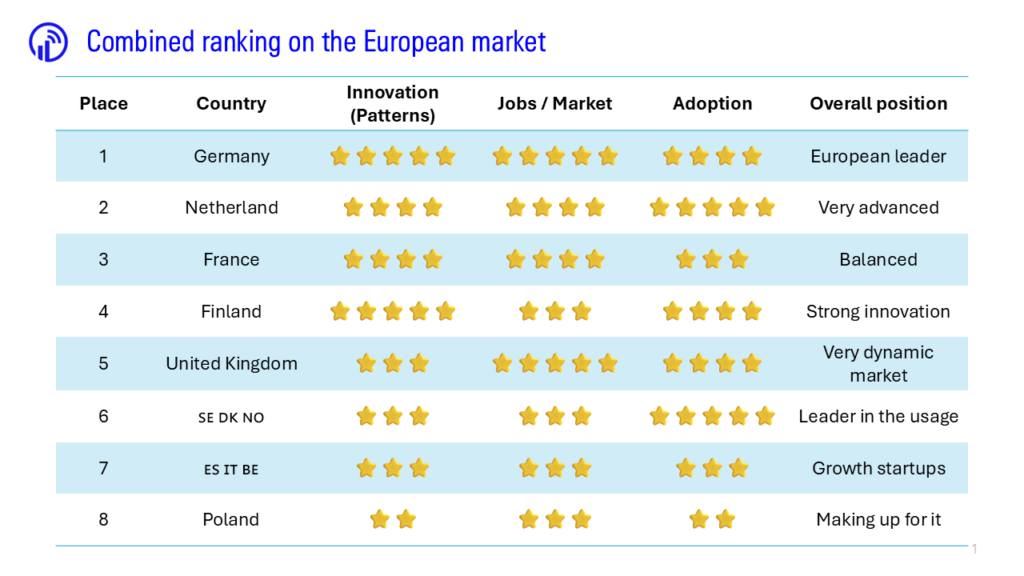
Organizations such as European Institute of Innovation and Technology (EIT) play a key role in structuring networks across stakeholders to support the development of strategic sectors in Europe.
According to Globally Cool – International business made easy, up to 62% of companies in France (72% in Germany, 84% in the UK, 63% in the Netherlands, etc.) report difficulties in recruiting IT talent in this field. This reflects a highly dynamic IoT market, although still considered a niche technology. Strat & IoT Consulting supports companies in navigating this complex technological transformation.
📌 European innovation remains strong. However, production is more exposed.
Can Europe continue to prioritize innovation locally while producing its outcomes on another continent?
The link may be somewhat simplistic, but maintaining competitiveness and securing margins are key priorities.